Chapter IV · 1917 – 1947
الانتداب
Empireandpromise
The Ottoman end, the Balfour Declaration, the British Mandate, the Great Revolt and the partition plan.
1516–1917
Ottoman rule. A mostly agrarian Arab society, with a small, long-established Jewish community and growing Zionist immigration from the 1880s.
Dec 1917
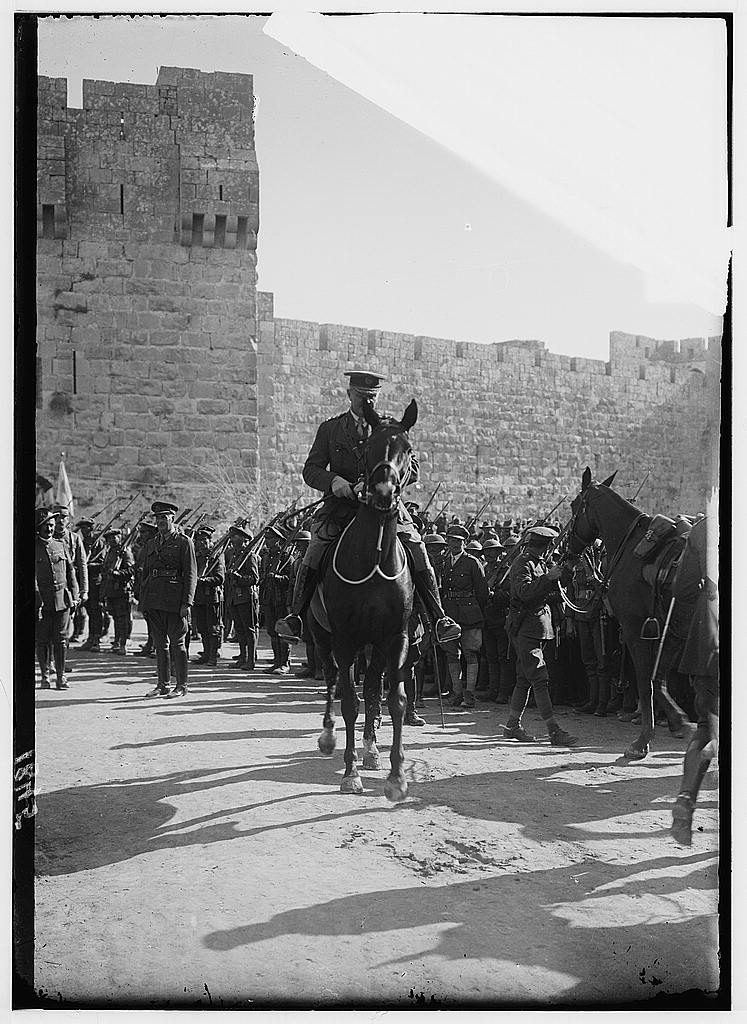
British forces under General Allenby capture Jerusalem during the First World War.
1922
The League of Nations approves the British Mandate for Palestine, which incorporates the Balfour Declaration.
1936–39
The Great Arab Revolt against British rule and mass Jewish immigration.
1947
Britain hands the question to the United Nations.
The Balfour Declaration
On 2 November 1917, Foreign Secretary Arthur Balfour wrote that the British government "view with favour the establishment in Palestine of a national home for the Jewish people". He added that nothing should be done to "prejudice the civil and religious rights of existing non-Jewish communities".
Those "non-Jewish communities" were about 90% of the population. They were not consulted, and the letter does not name them. The same imperial power had also made wartime promises of Arab independence to the Sharif of Mecca. Palestinians remember this contradiction as the root of what followed.
The Mandate
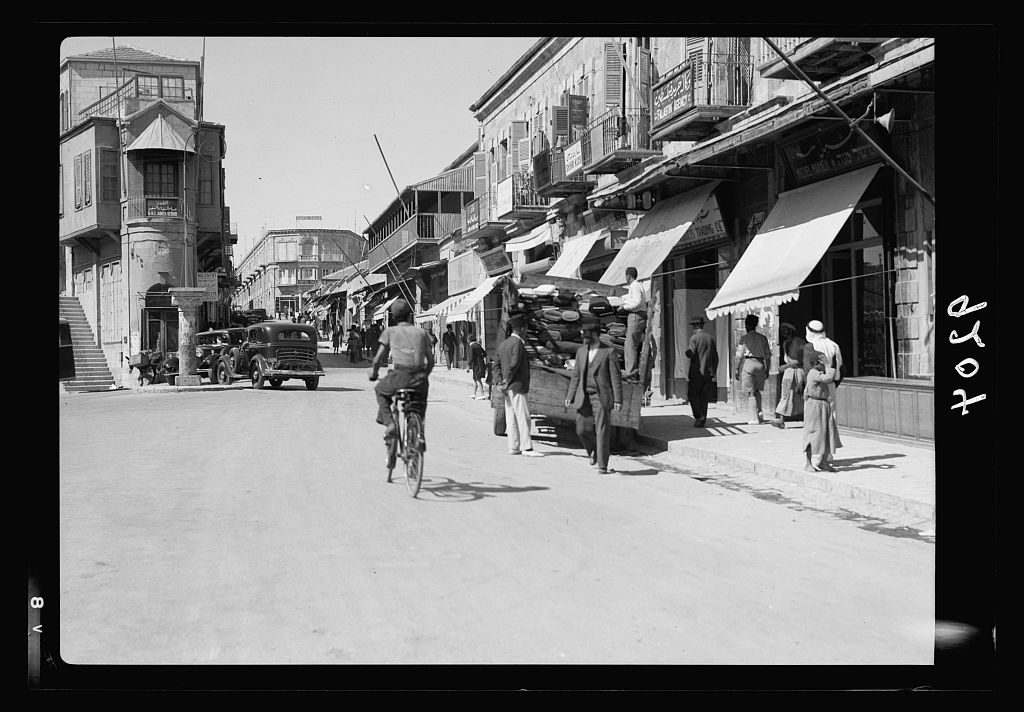
The Mandate text made Britain responsible for "placing the country under such political, administrative and economic conditions as will secure the establishment of the Jewish national home". Jewish immigration grew sharply in the 1930s as persecution rose in Europe. The Jewish share of the population went from about 11% in 1922 to roughly 31% by 1946. Land purchases by Zionist organisations sometimes displaced Arab tenant farmers.
1936–1939: the Great Revolt
A six-month general strike in 1936 became an armed uprising against British rule. Britain's Peel Commission proposed partition for the first time in 1937. British forces crushed the revolt by 1939 with collective punishment, house demolitions and executions. Several thousand Palestinians were killed, and much of the Palestinian political leadership was exiled. That left Palestinian society weakened going into 1947.
The Holocaust and Jewish refuge
Nazi Germany and its collaborators murdered six million Jews. After the war, hundreds of thousands of Jewish survivors were stranded in displaced-persons camps, and many countries kept their doors largely closed. That catastrophe is real and must be named. The cost of answering it was placed on a people who had no part in it.
1947: the partition plan
On 29 November 1947, the UN General Assembly adopted Resolution 181. It recommended dividing Palestine into an Arab state and a Jewish state, with Jerusalem under an international regime. The proposed Jewish state covered about 56% of the land. At the time, Jews made up about a third of the population and owned roughly 6–7% of the land.
The Jewish Agency accepted the plan. Palestinian Arab leaders and the Arab states rejected it as a violation of the majority's right to self-determination. Fighting began almost immediately.
~56%
Share of Mandate Palestine allotted to the proposed Jewish state
As of 1947